

Area Light Price | Bollard and Tall-Pole, Direct from Manufacturer Takshidfam
Area lights are designed for even lighting of walkways, sidewalks and common spaces within a complex or garden. Unlike decorative lights, the main focus of this product is wide light coverage, safety for nighttime movement and durability under heavy traffic. To see related models, you can also visit the garden lights and park lights categories.
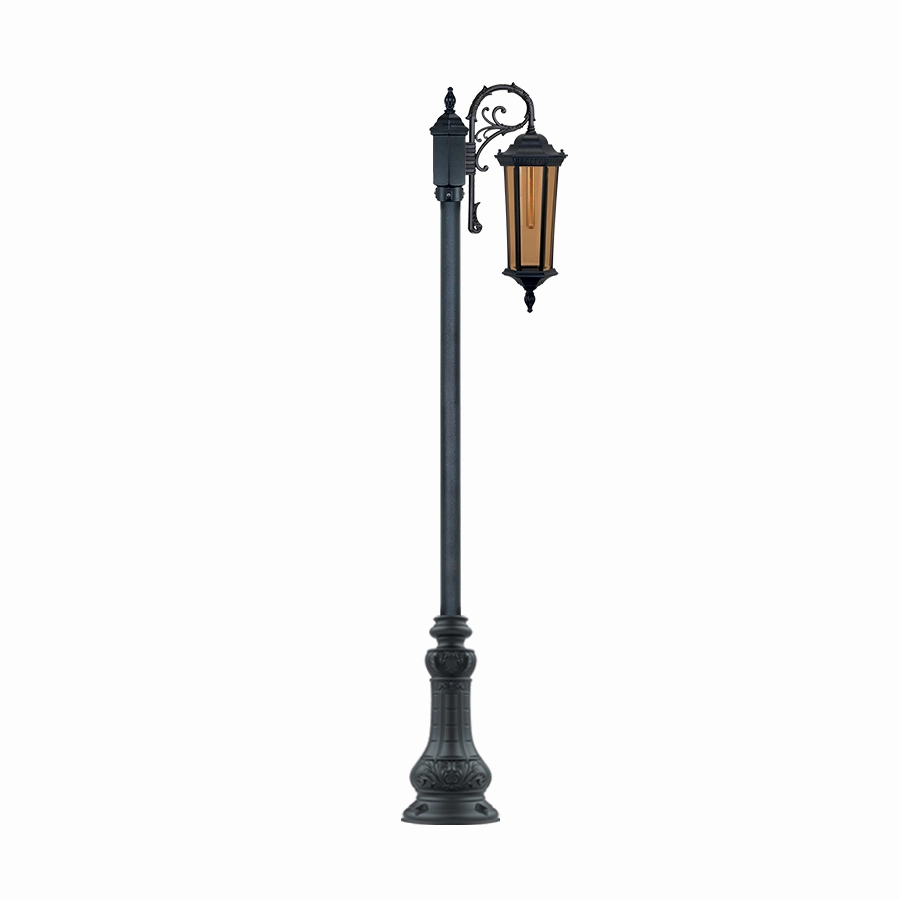
Factors Affecting the Price of Area Lights
01 — Waterproof area lights for busy paths
Because this product is usually exposed to the most foot traffic and changing weather, its body must resist humidity, snow and direct rainfall. A high IP rating and proper sealing prevent water from entering the internal circuit and extend the product’s service life in rainy seasons.
02 — Tall-pole area lights for wide coverage
In large grounds such as complex parking lots or wide gardens, a taller pole spreads light more evenly over a larger area of ground and reduces the number of lights needed to fully cover the space. This also reduces installation and maintenance costs in the long run.
03 — Modern design with a bollard form
Modern models are usually designed as short cylinders (bollards), which have minimal beauty and suit path edges and flower bed borders without casting distracting shadows.
04 — LED version for outdoor spaces
Using LEDs in area lights is especially important for complexes where lighting must stay on all night, because it noticeably reduces power consumption without reducing light intensity.
05 — Use in gardens and villas
In private gardens and villas, combining this product with decorative lighting is common. To compare with more decorative models, also see the garden lights or villa lights pages.
06 — Maintenance and cleaning
To keep the globe bright and prevent dust build-up, it is recommended to clean the outer surface of this product every few months with a soft, damp cloth. Avoid abrasive detergents that could damage the body’s protective coating, so its appearance is preserved for years.
07 — Difference from decorative models
The main purpose of area lights is safety and even light coverage, while garden lights and villa lights are more about aesthetics. Combining both types in one project usually gives the best visual and functional result.
08 — Which projects is it suitable for?
This product is a good option for residential complexes, open-air parking lots, footpaths in large gardens and office grounds. If your project includes several areas with different uses (paths, parking, seating), a combination of short and tall poles can be used for each area separately to provide both safety and beauty.
How to choose the right model?
To choose the right area light, answer these questions:
- Are your grounds mainly for pedestrian traffic or car parking?
- Do you need wide light coverage (tall pole), or is spot lighting of the path enough?
- Will the product stay on all night or only in the early evening?
To see the full product range, visit the Takshidfam products page.
Area Light Price from the Manufacturer
The price of this product depends on the pole height, body material and type of light source. For an exact area light price based on the size of your grounds, contact our sales experts or leave a message on the contact us page.
Exactly which spaces does area lighting cover?
Any open space where people move around, park cars or sit and talk at night needs planned lighting. An area light in such a place is not just a decorative item; it is part of the grounds’ infrastructure that should be decided on at the same time as the cable route, paving and green space. The needs of each use also differ:
- Residential complex: even light on paths between blocks, open-air parking and playgrounds, without shining directly into apartment windows.
- Villa and house with a yard: softer light closer to the ground that keeps a homely feel and does not disturb the neighbors.
- Factory and warehouse yard: enough visibility for heavy vehicle traffic, loading and security; here full coverage and durability matter more than delicate looks.
- Hotel and hospitality venue: combining path lighting with green space lighting so guests can both find their way and enjoy the view.
- Parks and public gardens: sturdy lights at regular spacing whose repair and part replacement are simple for the operator.
Before choosing a model, be clear whether the area lights in your project are mainly meant to create safety, show the way or give the space character; the answer to this question determines the height and number of lights.
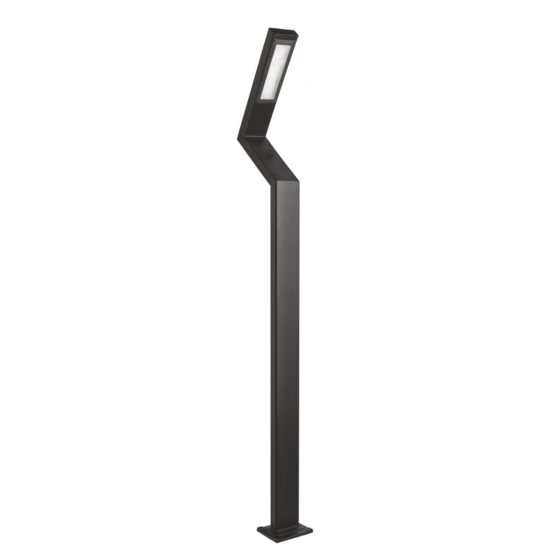

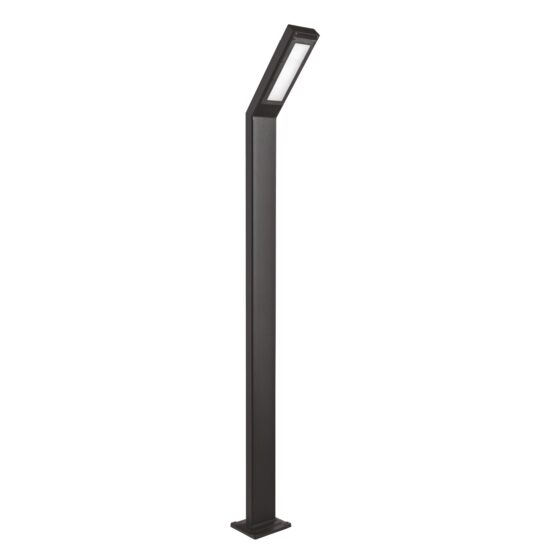
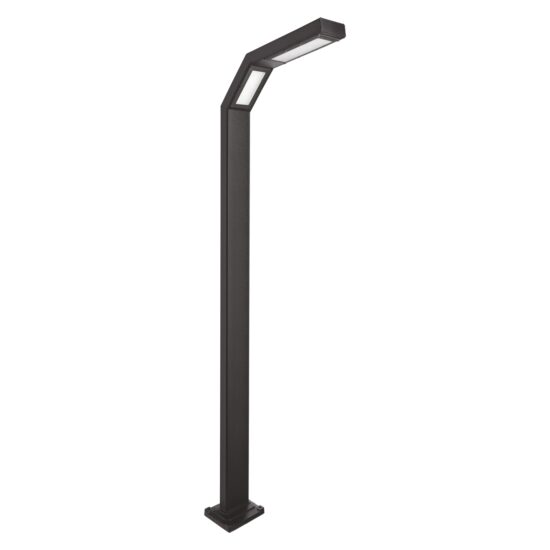
Classifying area lights by mounting height
The simplest way to understand this family is to look at the height of the light point. The higher the light source, the larger the area it covers, but the more light output and the more precise glare control it needs. The figures below are approximate and common, and the final choice depends on the project’s dimensions.
- Short and lawn lights (usually under one meter): suitable for flower bed edges, beside steps and narrow paths. They cast light onto the ground and do not shine directly into the eyes. See examples on the garden and lawn lights page.
- Medium poles (about two to three meters): the most widely used area lights for complex sidewalks, villa yards and office grounds; a height that lights a passer-by’s face and suits the human scale.
- Tall poles (about three to five meters): for open-air parking, internal streets and squares. This group is close to park lights and is often made with two or more arms.
- Wall and gate post lights: where there is a wall or pillar, they play the same role without excavation or foundations and complement pole lights.
In most projects one group is not enough. Combining medium poles for the main path with short lights for the green space keeps consumption reasonable and takes the grounds out of monotony.
Designing a simple layout: from sketch to mounting point
For small and medium grounds you do not necessarily need lighting calculation software. With a few rules of thumb you can arrive at a layout that puts every area light in the right place, so there is no need to relocate and dig again later.
Rules of thumb for height and spacing
- The spacing between two poles is usually taken as about three to four times the mounting height; for a three-meter pole, that means roughly nine to twelve meters. Frosted, diffusing globes call for closer spacing.
- Short path lights can be spaced about four to six meters apart. On wide paths, a staggered layout on both sides gives a more even result than a one-sided row.
- Match the pole height to the width of the space; a tall pole on a narrow path wastes light on the flower bed and the neighbor’s wall.
- Path intersections, steps, level changes, building entrances and the parking entrance are mandatory points. Mark them first, then fill the gaps in between.
Uniformity of light matters more than its intensity. The eye sees more comfortably in a space with soft but continuous light than in a place where very bright and dark patches follow one another. That is why, before final installation, temporarily switch on one area light at night and gauge the spread of light on the ground.
Cabling, earthing and electrical safety in the grounds
The hidden part of the work is what determines the system’s lifespan. The supply cable is best buried underground inside protective conduit at a suitable depth, with warning tape over its route so it is not damaged by gardening or later digging.
- Cable cross-section: on long runs, voltage drop is serious; the electrician calculates the cross-section based on the line length and the total wattage of the lights.
- Separate circuit: provide an independent circuit for the area lights with a miniature circuit breaker and residual current device in the panel, so a fault in one light does not cut the building’s power.
- Earthing: the metal body and pole must be connected to an earth wire; in a damp space accessible to children, this cannot be overlooked.
- Connections: make cable splices inside the pole or in a waterproof junction box, not with electrical tape under the soil.
Leave this part to a skilled electrician and keep a map of the cable route; a few years later, when you want to add an area light to the line, this map makes the job simple.
Periodic maintenance and frequently repeated mistakes
Annual inspection schedule
Maintaining area lights is not hard work, provided it is regular. Once or twice a year, preferably before the rainy season, review these items: tightness of the pole bolts, the condition of gaskets and the cable entry, the state of the paint at the bottom of the pole, which is in contact with irrigation water and fertilizer, and branches that have grown and are blocking the light.
In classic models with an E27 socket, changing the lamp is simple; choose lamps of the same color and wattage for one row so the grounds’ lighting does not become two-toned. Replace a damaged part such as the globe promptly too, so water and insects do not get inside.
Five common mistakes
- Choosing a light only from a photo, without considering its actual height and how it suits the space.
- Installing a pole on loose soil or paving tiles without a foundation and bolts; such a pole leans after a few months.
- Using very white, high-power light in a residential yard, which both causes glare and takes away the calm of the space.
- Relying on one area light for the whole yard instead of several lower-power light points with better distribution.
- Forgetting spare conduit and cable for future expansion of the grounds.
As a manufacturer, Takshidfam makes area lights in both classic and modern styles, and for projects ordering a custom model, color and dimensions is possible. An 18-month warranty and spare parts supply for up to 10 years make long-term maintenance plannable.
If you have a sketch and dimensions of your grounds ready, browse the models in the catalog and price list and get advice on choosing the height and number of area lights via the contact page.
Daily operation: when and how should the lights come on?
After installation, the main question is no longer “which model” but “at what time and at what intensity.” If a yard light stays on at full power all night, it uses more electricity and wears out sooner; and if switching it on depends on the caretaker remembering, some nights it stays dark. A few simple tools automate this.
- Photocell: a sensor that switches the circuit on when it gets dark and off with morning light. Place it where the lights themselves or car headlights do not shine on it, otherwise the circuit will keep switching on and off.
- Timer: for areas used only until a certain hour, such as a playground or seating area. Review its setting as the seasons change and sunset time shifts.
- Motion sensor: suitable for low-traffic corners such as behind the building and beside the storeroom; not a good option for the main path, which needs continuous light.
Dividing circuits by use
Automatic control works only when each area light is connected to the right circuit. In medium-sized grounds, three groups are usually enough: paths and the entrance, which stay on until morning; green space and seating, which switch off at midnight; and the parking or service area, which runs on a sensor. Also put a manual switch next to the panel so you can temporarily override automatic control during repairs or parties.
Light for security or light for atmosphere?
These two goals are often confused. Security lighting must be continuous, with no dark corners, and show faces and movement from a distance; atmospheric lighting, on the contrary, works with soft contrast and shadow. If you ask one area light to do both jobs, usually neither is done well.
- For security, prioritize entrances, the perimeter wall, parking and spots hidden from window view. Very strong light is not needed; the harsh shadow behind a floodlight itself creates a hiding place.
- For atmosphere, keep the light lower and warmer and let part of the garden stay semi-dark so the depth of the space is felt.
- If you have CCTV cameras, position area lights so direct light does not fall into the camera frame and wash out the image.
Light color and visual comfort
At night the eye is more sensitive to contrast than by day. Warm light looks calmer in residential and seating areas, and natural light gives more clarity in parking and driveways; common values are about 3000 and 4000 kelvin, but the final choice depends on use and taste. At the border between two areas, make the change in light color gradual so no area light looks like a mismatched patch. A frosted globe is also more comfortable for the eyes of older people and drivers than a bare light source.
Seasonal calendar for light care
An annual inspection is necessary, but each season also has its own small task. With this simple calendar, area lights stay ready all year round:
- Spring: after the rains, check the poles for leaning and soil settling around the foundation, and prune newly grown branches that have come in front of the light.
- Summer: clean dust and insect nests off the globe; this season has the most nighttime hours spent in the yard, and low light is more noticeable.
- Autumn: collect leaves piled at the base of the poles so constant moisture does not sit against the paint, and adjust the timer to the earlier sunset.
- Winter: when clearing snow, watch out for shovel and vehicle impacts on the pole, and do not spread de-icing salt at the base of area lights; salt is the enemy of the coating.
Renovating old grounds
In many complexes and gardens a lighting system exists but is worn out: globes have yellowed, poles have rusted and half the lamps are off. Renovation does not necessarily mean tearing everything out. Before ordering area lights, assess the condition of three parts separately.
- Cable and conduit: ask the electrician to test the cable insulation and the continuity of the earth wire. If the cable is sound, the costly excavation part is eliminated.
- Foundation and pole: a sound concrete foundation can be kept, provided the bolt spacing matches the new base plate or an adapter plate is made. A pole that has rotted from inside is not worth repainting.
- Placement: do not repeat the old light positions without question; trees may have grown or the use of part of the yard may have changed.
If the budget does not allow replacing everything at once, proceed section by section, not every other light. When new area lights sit next to old ones in one row, the light color and appearance become mismatched. To find matching models in various heights, browse all products.
Comparing quotations: beyond the figure at the bottom of the page
When you have two or three offers on the table, the lowest figure is not always the most economical choice. To weigh an area light against its true equivalent, put these items side by side:
- Body material and coating method; aluminum with oven-cured powder coating cannot be ranked alongside painted sheet iron.
- Full height and number of arms; sometimes the price difference comes from just half a meter of height.
- Globe material and whether it has been stabilized against sunlight.
- Included items: in which offer are the lamp, bolts and mounting plate included?
- Warranty period and, more importantly, a commitment to supply parts in later years.
- Shipping cost to the project site and delivery terms.
Takshidfam products carry an 18-month warranty and spare parts supply is guaranteed for up to 10 years; write these two rows separately in your comparison table. The current area light price list can be downloaded from the catalog and price list page. If you are unsure about reading a quotation or choosing between two area lights, consult our experts via the contact page.
Frequently Asked Questions about Area Lights
The price varies with pole height and body material; call for an exact quote.
Yes, you can place your order by phone or WhatsApp, and the product is shipped throughout Iran.
This depends on the area and the spacing of the paths; our experts can advise based on a plan of your grounds.
The bollard model suits lighting close to the ground and along paths; the tall-pole model provides wider light coverage for large spaces.
Yes, Takshidfam products come with a valid warranty, and our support team is available for technical guidance after purchase.
Request a Quote for the Right Area Light Now
Takshidfam sales experts are ready to provide purchasing advice and an exact price for the best model to suit the size of your grounds.