

Buy Takshidfam Modern Aluminum Park Lights – Park and Green Space Lighting
Takshidfam Lighting Industries manufactures aluminum modern park lights with die-cast bodies and minimal design. These lights are designed to illuminate parks, public gardens, walking paths and urban green spaces, creating even, energy-efficient light throughout the night. To see more traditional examples, you can also visit our classic park lights.
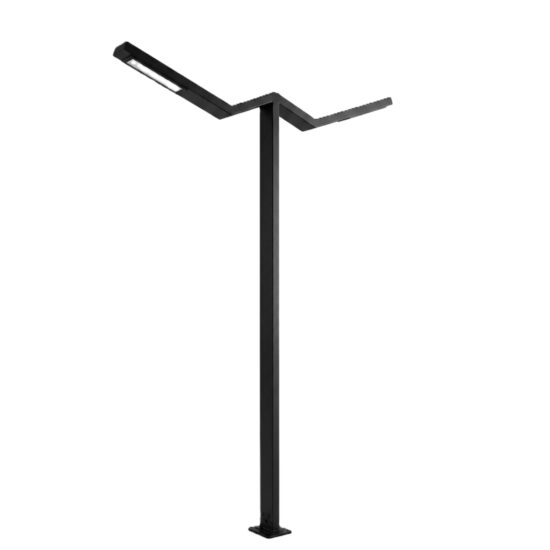

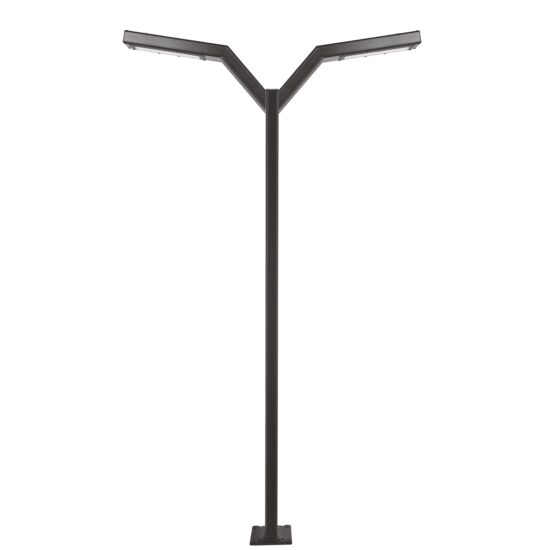
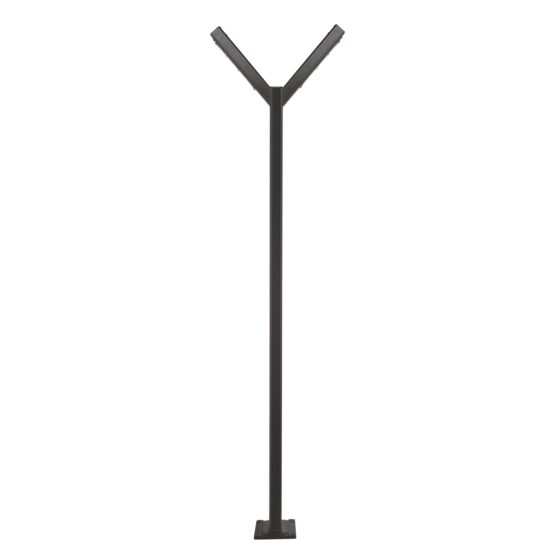


Features of Takshidfam Modern Park Lights
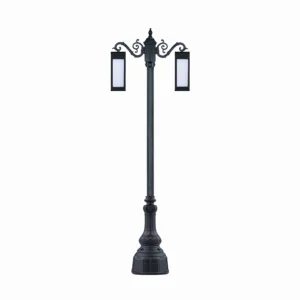
Takshidfam’s modern park light is made with a die-cast aluminum body, simple lines and electrostatic polyester paint resistant to sun and moisture; a durable, low-maintenance option for long-term public lighting.
What Makes These Lights Different?
Die-Cast Aluminum Body
The body of this product is produced by aluminum injection (die-casting); a process that creates a uniform, seamless body with high dimensional accuracy. This production method increases the light’s strength against impact, vandalism and harsh weather conditions.
Electrostatic Polyester Paint
The body of these lights is coated with high-quality electrostatic polyester paint; a paint resistant to UV radiation, rain, snow and moisture that is highly durable under the continuous, long-term use of parks.
LED Compatibility and IP Rating
These lights are designed for all kinds of energy-saving LED bulbs, which reduce the electricity costs of parks and public spaces. A suitable IP protection rating prevents water and dust from getting in and allows worry-free continuous outdoor use.
Tall, Sturdy Pole
Takshidfam’s modern park light is usually installed on taller poles to provide wider light coverage along walking paths and green spaces. The poles are fixed in the grounds with a solid metal foundation.
Variety of Designs and Sizes
The range of these lights includes shorter models for narrow paths and taller ones for squares and large park areas. A variety of colors is available, including black, gray and dark green.
Uses in Different Spaces
These products are suitable for parks, public gardens, city squares, cycling and walking paths, and public grounds, and are used in municipal and green space projects.
What Makes Good Light in Today's Urban Spaces?
In today’s landscape design, a light is not just a means of lighting the path; it is part of the space’s architectural language. Choosing a modern park light gives the desired result when three questions are answered together: where does the light fall, what does the passer-by’s eye see, and what image does the light’s body create of the grounds by day? Below we review these three topics from a practical perspective.
Light Distribution: Lighting the Ground, Not the Sky
Old globe lights spread light in all directions, and a considerable part of it goes toward the sky or the windows of surrounding buildings. In contrast, in most of today’s LED models the light source faces downward and the light is concentrated on the path surface. The result is a brighter surface with less power and a darker night sky; something that matters a lot in residential complexes for the comfort of lower-floor residents.
For narrow footpaths an elongated light distribution aligned with the path is usually more suitable, and for plazas and seating areas a symmetrical, circular distribution. When evaluating a modern park light, ask whether its light is one-sided, two-sided or all-around; this simple point determines whether the light is installed beside the path or in the middle of the space.
Glare Control
Glare occurs when the eye sees the light source itself directly instead of the lit surface. Because of the small size and high intensity of its light point, LED is unpleasant without proper covering. A frosted polycarbonate diffuser turns the light points into a uniform surface, and recessing the light source inside the body also blocks the direct line of sight. In a modern park light, these two measures are the line between calm light and harsh light.
- If the light is installed near a bench or gazebo, choose a model whose light source stays hidden from the line of sight of a seated person.
- On sloped paths and stairs, glare increases the risk of slipping; indirect, downward light takes priority at these points.
- Very shiny floors such as polished stone or wet ceramic reflect light; in such grounds, lower intensity and more lights give a better result than a few bright ones.
The Right Color Temperature for Public and Residential Spaces
The color temperature of light is expressed in kelvin and directly affects the mood of the grounds. As a general guide, warm light of about 3000 kelvin creates a calm, intimate space and is a common choice for residential complex grounds, local parks and seating areas. Natural light of about 4000 kelvin makes details and colors easier to distinguish and is used more on busy paths, parking entrances and office spaces.
Very cool, bluish light is usually not recommended for residential grounds; it makes the space look dry and industrial and scatters more in the air. The more important point is consistency: if several rows of modern park lights are installed in one project, all should have the same color temperature, otherwise the grounds look patchy. These figures are approximate and the final choice depends on the use of the space, the color of materials and the client’s opinion.
Matching the Modern Park Light with Contemporary Architecture
Today’s architecture is known for straight lines, simple volumes and materials such as exposed concrete, glass, modern brick and sheet metal. A light placed next to such a façade should continue the same language: simple geometric sections, no extra ornamentation and neutral colors. Takshidfam’s modern line, with an LED light source, aluminum body and polycarbonate diffuser, is designed for exactly these kinds of spaces.
Minimal Design Language in Practice
- Proportion to building height: next to low buildings and villas, a shorter, slimmer pole creates better balance; in the grounds of towers and large complexes, a taller pole does not get lost.
- Color family: coordinate the body color with the window frames, railings and outdoor furniture. Dark gray and matte black remain neutral and unassuming next to most façades.
- Regular repetition: in minimal design, orderly spacing is part of the beauty. A row of modern park lights at equal spacing looks like an architectural element even by day.
- One family for the whole project: if a wall or pillar version of the same design exists, using it beside entrances makes the grounds look more unified.
If your project combines an old fabric with new construction, there is no need to use one style everywhere. You can use modern park lights in the new section and go for lantern designs for the old yard or garden; you can see and compare both styles side by side in the park and outdoor lights collection.
Energy Savings and Maintenance Over the Years
Outdoor lighting is on every night for long hours; so the real cost of a light over its lifetime comes more from power consumption and maintenance than from the purchase price. Compared with old incandescent and gas-discharge lamps, an LED light source uses far less electricity to produce similar light and has a longer working life. In a project with dozens of modern park lights, this difference is clearly felt in the electricity bill and the number of maintenance call-outs.
The second advantage of a modern park light is lower maintenance. The aluminum body does not rust and the electrostatic polyester paint withstands sun and rain, so there is no periodic repainting. Unlike glass, the polycarbonate diffuser does not easily break from the impact of a ball or tree branch. Even so, a few simple tasks extend the life of the installation:
- Once or twice a year clean the diffuser with a soft cloth and lukewarm water; settled dust blocks part of the light.
- Before the rainy season, check the condition of the gaskets and the cable entry point so moisture does not get inside the body.
- Retighten the bolts connecting the pole to the foundation once after the first winter.
- Prune branches that have grown in front of the modern park light; foliage shade is the most common reason paths gradually get darker.
Smart Control and Scheduling
Another part of the savings comes from how the lights switch on and off. A photocell or astronomical clock in the grounds’ electrical panel makes the lights turn on exactly at dusk, so no one needs to flip the switch every day. In large complexes, circuits can be split alternately so that after midnight half of the modern park lights switch off and only safety lighting remains.
What Should You Specify Before Ordering?
For more accurate technical advice, it is best to prepare some simple information before contacting us. A plan or even a hand sketch of the grounds with approximate dimensions, path widths, the location of the electrical panel and a photo of the building façade is enough to estimate the number and layout of modern park lights. Specifying the use of each area—walkway, play area, parking or seating—also helps in choosing the type of light distribution.
As a manufacturer, Takshidfam offers customization of color and dimensions for projects; so if a particular color matches the building façade better, raise it at the very start. Products come with an 18-month warranty and spare parts supply is guaranteed for up to 10 years; a point that matters as much to complex managers and maintenance contractors as the modern park light itself.
To see sample installations, visit the lighting projects page and download up-to-date model specifications from the catalog and price list. If you are torn between two modern park lights, our sales experts will guide you based on your grounds plan through the contact page.
To better understand the meaning of IP rating digits, you can see the official IEC guide on the IP code.
Frequently Asked Questions About Modern Park Lights
A modern park light is specifically for public green spaces such as parks and public gardens and usually has a taller pole to cover long paths. An outdoor area light has broader uses in parking lots, sidewalks and commercial complexes. Both are made with a die-cast aluminum body of the same quality.
For outdoor installation in parks, at least IP44 is recommended, which protects against water splashing from any direction. For rainy areas, IP65 or higher is more suitable. All Takshidfam park models have an IP rating suitable for public spaces.
Yes, customers can choose the pole height, body color and bulb type based on the path length and park dimensions. This is very useful for municipal and public green space projects.
These products are suitable for parks, public gardens, city squares, cycling and walking paths. Shorter models are recommended for narrow paths and taller models for larger spaces.
No, these lights are installed with a simple metal foundation in the grounds and need no complicated civil works. If needed, Takshidfam’s support team provides technical guidance for large projects.
The modern model is made with simple lines and clean geometry, suited to contemporary urban green spaces. The classic model has traditional ornaments and curved forms and mostly suits older parks. Both are made with a die-cast aluminum body of the same quality.
To see more traditional examples, you can also visit Takshidfam’s classic park lights and the pendant lights category.