

Buy Takshidfam Modern Aluminum Wall Lights – Exterior Façade Lighting
Takshidfam Lighting Industries manufactures aluminum modern wall lights with die-cast bodies and minimal design. These lights are installed on yard walls, stairways, balconies, building façades and beside footpaths, spreading light directly or in two directions (up and down). To see more traditional examples, you can also visit our classic wall lights.
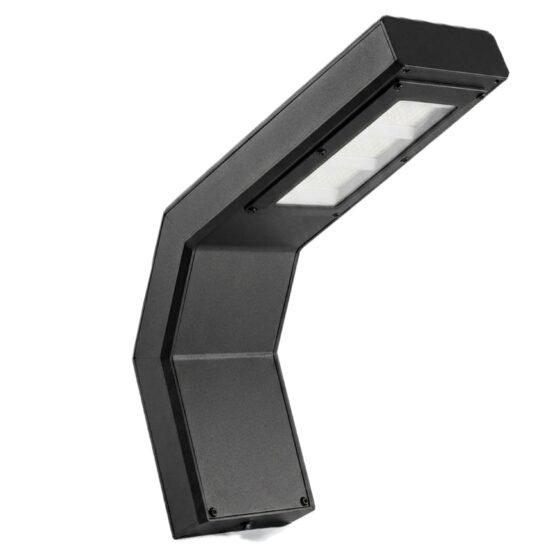

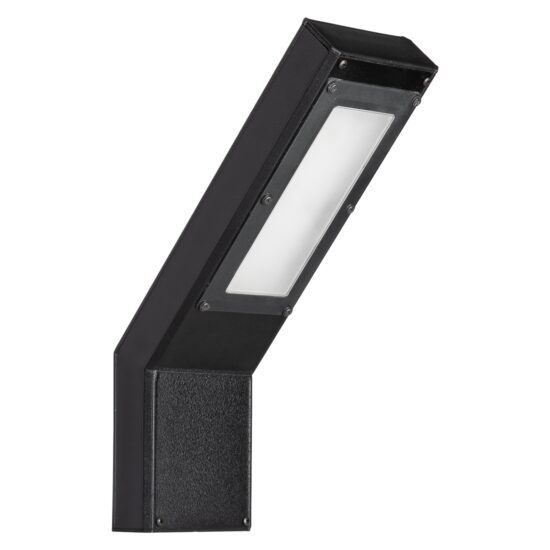
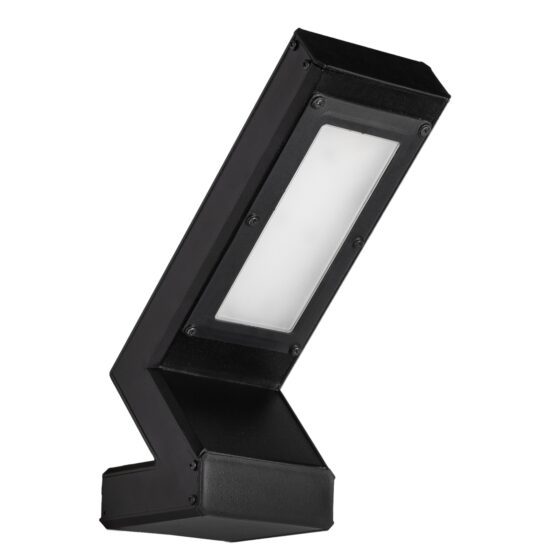
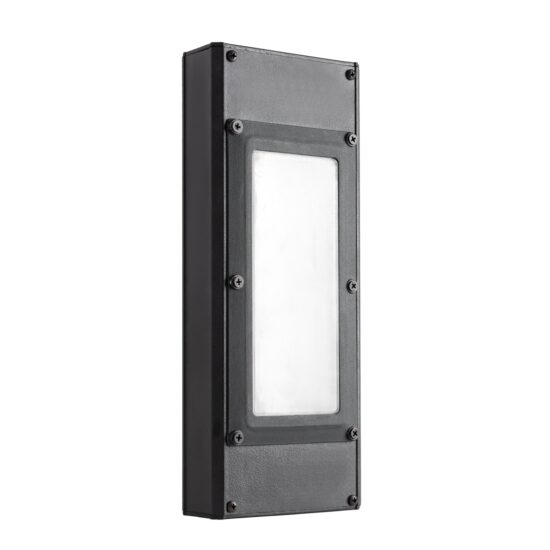


For flower bed paths and accent lighting of lawns, with a spike base that can be installed in soil. Two different heights for two separate uses.
Features of Takshidfam Modern Wall Lights
Takshidfam’s modern wall light is made with a die-cast aluminum body, simple geometric lines and electrostatic polyester paint resistant to sun and moisture; a light, durable option for lighting exterior walls.

What Makes These Lights Different?
Die-Cast Aluminum Body
The body of this product is produced by aluminum injection (die-casting); a process that creates a uniform, seamless body with high dimensional accuracy. This production method increases the light’s strength against impact and harsh weather conditions.
Electrostatic Polyester Paint
The body of these lights is coated with high-quality electrostatic polyester paint; a paint resistant to UV radiation, rain, snow and moisture that prevents the body from fading or peeling over the years.
LED Compatibility and IP Rating
These lights are designed for all kinds of LED and energy-saving bulbs and let you choose warm white, neutral or cool daylight. A suitable IP protection rating prevents water and dust from getting in and allows worry-free continuous outdoor use.
One-Way and Two-Way Light Distribution
Many Takshidfam modern wall light models cast light up and down the wall at the same time, highlighting the texture of the façade. Single-direction models are also suitable for direct lighting of paths or stairs.
Simple Installation on Vertical Surfaces
These lights are mounted directly on a wall, pillar or building façade with a few screws and need no complicated wiring or hanging from a ceiling. This simple installation makes them a practical option for stairways, corridors and yard walls.
Uses in Different Spaces
These products are suitable for stairways, balconies, yard and garden walls, villa façades and the outdoor corridors of hotels and restaurants. Their simple design matches today’s concrete, stone, wood and glass façades.
What Role Does a Modern Wall Light Play in a Contemporary Façade?
In today’s architecture, night light is part of the façade design, not something added later. A modern wall light on such a façade is not meant to be seen like a lantern; its job is to reveal surface, line and volume while staying in the background as much as possible. That is why, before the body shape, you should decide on the effect the light will have on the wall.
Designers usually answer three questions in turn: which surface should be seen, from which direction should light reach it, and where does the viewer look at the façade from? The answers to these three questions determine the body form and installation location of the modern wall light.
Linear, Cubic and Flat Forms: Where Each Fits
Linear Bodies
An elongated, slim form continues the vertical and horizontal lines of the façade. Installing a modern wall light vertically beside the entrance door or on the pier between two windows emphasizes height, while installing it horizontally above the house number or under an overhang emphasizes the façade’s length. Size the light in proportion to the adjacent element; a body covering about a third to half of the door’s height usually looks balanced, although this ratio is not a strict rule.
Cubic and Cylindrical Volumes
Small geometric volumes act like orderly dots on the façade. Repeating a modern wall light on pillars or at equal intervals creates a rhythm that reads even from a distance. Because the body is small, the sharpness of the edges and uniformity of color stand out more. Versions that emit light up and down suit pillars and piers, while one-way versions suit the area above doors and beside stairs.
Flat, Shallow Bodies
Panel-like bodies with little depth are useful in narrow corridors, balconies and beside parking ramps; places where a protruding light gets in the way. The light of this group mostly spreads downward or from behind the body onto the wall, creating a soft halo around the light.
Up-Down Light, Grazing Light and Wall Washing
The lighting effect of a modern wall light can be summed up in three patterns, and each pattern works for a particular type of surface.
- Up and down light: two beams or two cones of light form above and below the body. A narrow angle creates a sharp, dramatic line and a wide angle a soft, broad patch. If the light is under a ceiling or the balcony of the floor above, the upward beam has a surface to land on; otherwise the light going up to the sky is wasted and a one-way model is a better choice.
- Grazing light: the light source is very close to the surface and the light travels almost parallel to the wall. Every bump casts a shadow and the texture of the materials stands out. This pattern is excellent for chiseled stone, brick and board-formed concrete, and the worst choice for uneven walls or wavy plaster, as it magnifies every irregularity.
- Wall washing: light from a greater distance and at a wide angle lights the surface evenly. Texture is less visible and the color and extent of the surface more so. This pattern suits smooth colored walls, uniform panels and surfaces meant to be a calm backdrop for plants or furniture.
A building does not need to use only one pattern, but each elevation is better off with one dominant pattern. An unplanned mix of several effects makes the façade busy and destroys the advantage of the modern wall light’s simplicity.
Matching Light with Façade Materials
Each material reflects light in its own way, and choosing a light for today’s façades without considering this leaves the result to chance.
Stone
Matte, textured stones such as travertine gain depth with warm grazing light. Polished, glossy stone behaves like a mirror and reflects the image of the light source; on these surfaces, a modern wall light with a frosted diffuser and more diffused light gives a better result.
Brick
Brick with recessed joints is the best base for grazing light, and warm color keeps its redness alive. Cool light makes brick look gray and lifeless. A dark matte body sits legibly and solidly on brick and, by day too, looks coordinated with the joints and window frames.
Wood and Thermowood
Wood absorbs much of the light and looks best with warm, soft light. Since wood moves over time and needs periodic oiling, it is better to mount the modern wall light on solid framing behind the wood and leave access for removing it.
Cement and Exposed Concrete
Cement and concrete surfaces look clean and architectural with natural light of about 4000 kelvin, and softer and more homely with warm light. Formwork marks turn into a pattern under grazing light. On this neutral background, the body of the modern wall light can match the wall color so that only the light is seen, or be dark and act like a graphic line.
Color Temperature and Glare Control
Warm light of about 3000 kelvin is a common choice for homes and villas, and natural light of about 4000 kelvin for office and commercial façades; what matters is that it stays the same across the whole façade. Since in many LED models the light color is set at the time of ordering, look at the light color next to a sample of your own materials before ordering a modern wall light.
Glare is the biggest flaw of façade lighting. The light source should not be directly visible from the usual viewing angle of a passer-by, a driver or someone sitting on the terrace. When choosing a modern wall light, look at it from below and from the front, not just from the catalog photo angle.
- A body that keeps the LED set back from the edge hides the light source from view.
- A frosted diffuser turns bright points into a soft, uniform surface.
- Lower intensity with correct distribution looks better than high intensity with poor distribution.
- Use upward light only where there is a surface to receive it.
From Façade Plan to Order
If the building is in the design stage, mark the location of each modern wall light on the plan so the electrical point sits exactly behind the body and no surface cable is visible. For an existing building, a few photos of the façade and approximate dimensions are enough to form an initial proposal.
You can see the models on the Takshidfam wall lights page and in the catalog and price list, and visit lighting projects to see sample installations. For projects, the model, color and dimensions can be customized. Like other Takshidfam lights, the modern wall light comes with an 18-month warranty and spare parts supply is guaranteed for up to 10 years.
To better understand the meaning of IP rating digits, you can see the official IEC guide on the IP code.
Frequently Asked Questions About Modern Wall Lights
A pillar light is specifically for installation above the entrance door or on the main façade of a building, while a modern wall light has broader uses and is also used for stairways, balconies, yard walls and footpaths. Both are made with a die-cast aluminum body of the same quality.
For outdoor installation, at least IP44 is recommended, which protects against water splashing from any direction. In rainy areas or by a pool, IP65 or higher is more suitable. These products have an IP rating suitable for outdoor spaces.
Yes, customers can choose the body color, the type of light distribution (one-way or two-way) and the bulb type based on the project’s needs. This lets the light match the façade style and the intended space.
These products are suitable for stairways, balconies, yard and garden walls, villa façades and the outdoor corridors of hotels and restaurants. Smaller models are recommended for confined spaces and larger models for wider façades.
No, installing these lights is simple; they are attached to the wall with just a few screws. There is no need to hang them from a ceiling or adjust height. If needed, Takshidfam’s support team provides technical guidance.
The modern model is made with simple lines, clean geometry and minimal design, suited to contemporary façades. The classic model has traditional ornaments and curved forms and mostly suits villa façades. Both are made with a die-cast aluminum body of the same quality.
To see more traditional examples, you can also visit Takshidfam’s classic wall lights and the pendant lights category.