

Takshidfam Outdoor LED Area Lights – Die-Cast Aluminum, Direct from Manufacturer
-

چراغ ویلایی ویکتوریا کمرباریک (6)
-
چراغ ویلایی ویکتوریا خمرهای (6)
-
چراغ ویلایی ویکتوریا (6)
-
چراغ ویلایی ویکتور (6)
-
چراغ ویلایی ویسپر (6)
-
چراغ ویلایی ویدا (2)
-
چراغ ویلایی وستا کوچیک (6)
-
چراغ ویلایی وستا بزرگ (5)
-
چراغ ویلایی مهرگان (6)
-
چراغ ویلایی معبد ویسپر (6)
-
چراغ ویلایی معبد سورنا کوتاه طرحدار (6)
-
چراغ ویلایی معبد سورنا کوتاه (6)
-
چراغ ویلایی معبد سورنا بلند طرحدار (6)
-
چراغ ویلایی معبد سورنا بلند (6)
-
چراغ ویلایی معبد سورن کوتاه طرحدار (6)
-
چراغ ویلایی معبد سورن کوتاه (6)
-
چراغ ویلایی معبد سورن بلند طرحدار (6)
-
چراغ ویلایی معبد سورن بلند (6)
-
چراغ ویلایی معبد رابو کمرباریک (6)
-
چراغ ویلایی معبد رابو خمرهای (6)
-
چراغ ویلایی معبد رابو (6)
-
چراغ ویلایی کلبه (5)
-
چراغ ویلایی سورنا کوتاه طرحدار (6)
-
چراغ ویلایی سورنا کوتاه (6)
-
چراغ ویلایی سورنا بلند طرحدار (6)
-
چراغ ویلایی سورنا بلند (6)
-
چراغ ویلایی سورن کوتاه طرحدار (6)
-
چراغ ویلایی سورن کوتاه (6)
-
چراغ ویلایی سورن بلند طرحدار (6)
-
چراغ ویلایی سورن بلند (6)
-
چراغ ویلایی روبینا (6)
-
چراغ ویلایی رابو کمرباریک (6)
-
چراغ ویلایی رابو خمرهای (6)
-
چراغ ویلایی رابو (6)
-
چراغ ویلایی پالیز (6)
-
چراغ ویلایی پادینا طرحدار (6)
-
چراغ ویلایی پادینا (6)
-
چراغ ویلایی پادرا (5)
-
چراغ ویلایی آیسان (6)
-
چراغ ویلایی آرتمیس (6)


Takshidfam’s outdoor LED area lights are a good option for anyone looking to reduce electricity consumption as well as for beauty and durability. This product, with a die-cast aluminum body, UV-resistant polycarbonate globe and electrostatic powder coating, is produced and supplied directly from the factory with no middlemen. Its classic and modern models suit any architectural style and space.
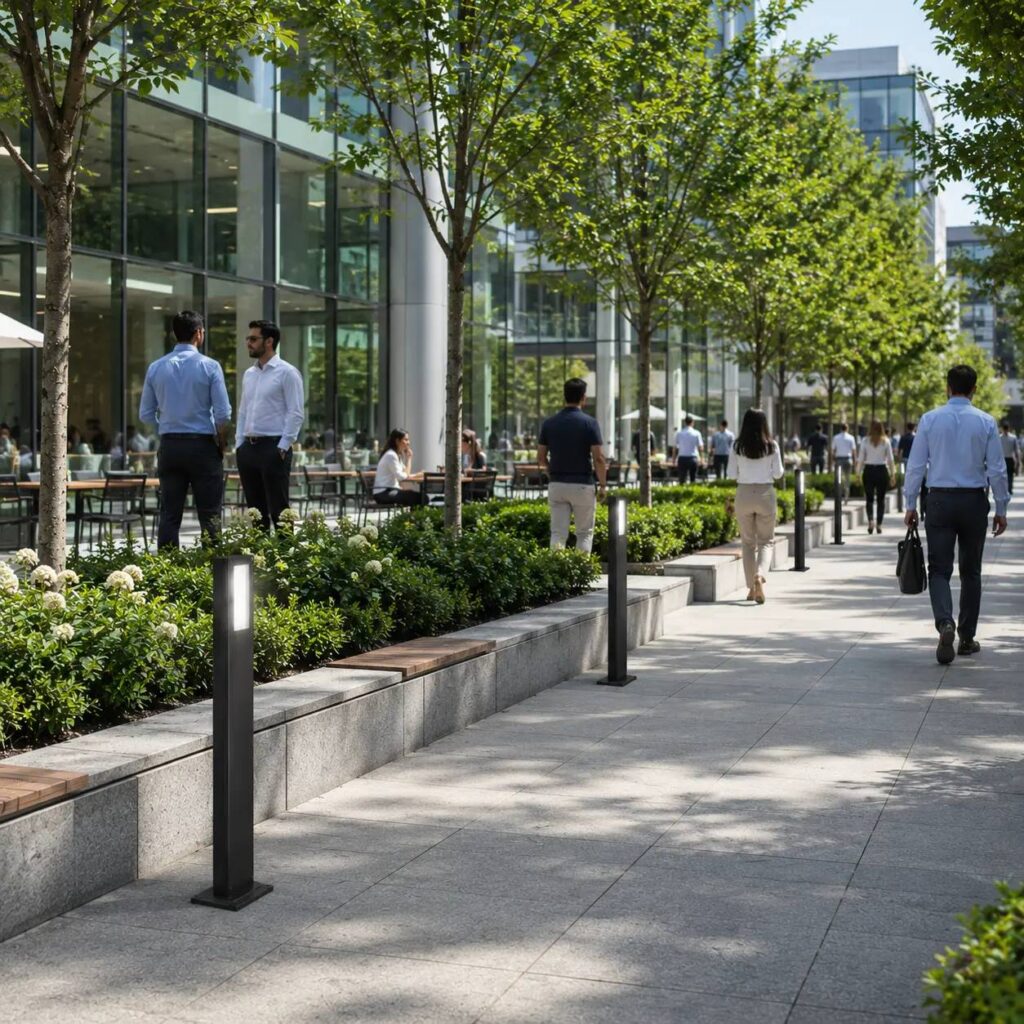
Technical Features of Outdoor LED Area Lights
01 — Die-cast aluminum body
The die-cast aluminum body dissipates the heat produced by the LEDs well and helps extend the product’s service life. This material resists rust, humidity and temperature changes and is lighter than traditional metal bodies.
02 — Low energy consumption and long life
Compared with ordinary lights, this product uses up to 70 percent less electricity. The LED lamp used has a life of 25,000 to 50,000 hours, which noticeably reduces replacement and repair costs.
03 — Durable polycarbonate globe
The polycarbonate globe used resists UV radiation and impact and prevents the light from yellowing and dulling over time. This feature preserves the product’s lighting performance in the long run.
04 — Electrostatic powder coating
The paint coating is applied by oven-cured electrostatic method and creates a double protective layer against the weather. Custom colors can also be ordered to match the décor of the space.
Types and Applications of Outdoor LED Area Lights in Different Spaces
Outdoor LED area lights are produced in a variety of models: pole models for lighting footpaths and the main grounds, wall models for building façades and entrances, lawn models beside flower beds and green spaces, and park models for larger spaces. All these models can be produced with die-cast aluminum bodies in both classic and modern styles.
If the architecture of your grounds is traditional, classic models with ornamental designs are the better choice, and in spaces with modern, minimal architecture, simple linear models create more harmony. To see other lighting products, view the Takshidfam product collection.
Buy Outdoor LED Area Lights with Free Consultation and a Fair Price
What has LED technology changed in grounds lighting?
Until a few years ago, yard and grounds lighting used incandescent, compact fluorescent or gas-discharge lamps, and a large share of the electricity was turned into heat. An outdoor LED area light produces the same amount of light with less power, switches on instantly and is not damaged by frequent switching. To compare two products correctly, learn three concepts.
- Luminous efficacy: the ratio of light output (lumens) to power consumption (watts). Judge a light by lumens, not watts; two lights of the same wattage can give very different amounts of light.
- Service life: an LED usually does not burn out suddenly but gradually dims. The stated life means the time at which the light falls to a specified share of its initial output.
- Driver: the power circuit that adapts mains electricity for the chips. In practice, many failures come from the driver and power fluctuations, not from the LED itself.
These three items can be followed on the spec sheet of every outdoor LED area light. If a seller only talks about watts, ask about lumens and the type of driver too.
Heat: the hidden enemy of LEDs
LED light has little radiant heat, but the back of the chip gets hot, and if this heat has no way out, light loss and color shift arrive prematurely. In an outdoor LED area light, the metal body acts as the heat sink; aluminum conducts heat well and the light’s outer surface releases it into the air.
That is why you should not put a high-power lamp in a small, fully enclosed globe, and should respect the manufacturer’s recommended wattage. Keeping the body free of thick layers of dust and leaves also helps the outdoor LED area light stay cool and last longer.
Integrated LED or an LED lamp with an E27 socket?
When buying outdoor LED area lights you will see two approaches. In the first, the light source is part of the light itself; in the second, the light has a standard socket and a separate LED lamp is fitted to it. Neither is absolutely better, and the choice depends on the project.
- Integrated light source: a slim, linear form, designed light distribution and less glare. Takshidfam’s modern line, with an LED light source, aluminum body and polycarbonate diffuser, belongs to this group.
- E27 socket: the lamp can be changed at any time, the light color changed or the wattage raised or lowered. The classic line, with die-cast aluminum bodies and polycarbonate or glass globes, has this structure.
If you handle maintenance yourself and want to keep your outdoor LED area lights running without special tools, an E27 socket gives you freedom. In contemporary developments where uniformity of form and light matters, the integrated model gives a neater result. Spare parts supply for up to 10 years backs maintenance in both cases.
Choosing light color and controlling glare in outdoor LED area lights
Color temperature
The light color of an outdoor LED area light is expressed as color temperature in kelvin. Warm light of about 3000K is more relaxing for home yards, gardens and seating areas and makes brick, wood and plants look pleasant. Natural light of about 4000K gives more clarity for parking, traffic routes and office grounds. Very cold light looks harsh in a residential setting.
More important than the number itself is its consistency. If outdoor LED area lights of different light colors sit side by side in one row, the space looks messy; buy all the lamps of one type and preferably in one batch.
Glare and light pollution
An LED chip is a small, very bright point, and looking at it directly hurts the eyes. A frosted globe or diffuser spreads and softens the light. When choosing an outdoor LED area light, also consider where the light goes: a light that sends a large share of its output into the sky or the neighbor’s window wastes electricity and dims the night sky.
- Direct light downward onto the surface that needs to be seen.
- Instead of one very bright source, use several softer light points.
- Beside bedrooms and seating areas, choose shorter lights with frosted globes.
The logic of electricity cost: how to calculate it yourself
You do not need advertising figures to estimate consumption. Multiply the wattage of each light by the number of lights and the nightly lighting hours, and divide by a thousand to get daily kilowatt-hours; then multiply that by the tariff on your own bill. With this method you can compare outdoor LED area lights with your old system.
The real cost is not just electricity. Also consider how often lamps are replaced, the service technician’s wages and the time the grounds stay dark. A photocell or timer that keeps the light off in daylight completes the savings of outdoor LED area lights, and in large developments dimming the light after midnight is also a sensible option.
To see pole models and compare heights, visit the park lights page, and for shorter examples see garden and lawn lights. If you are unsure about the wattage and number of LED area lights for your project, send the dimensions of the space via the contact page for guidance from Takshidfam experts.
From old lamps to LED: renovation without rework
Many yards and grounds still run on compact fluorescent, mercury vapor or sodium lamps, and the owner wants to move to new technology without digging up the ground. Replacing an old system with outdoor LED area lights can be done in three ways, each with its place.
- Lamp replacement: if the existing light has an E27 socket and its body and globe are sound, fitting an LED lamp is the simplest way. Just make sure the lamp fits in the globe with space left around it.
- Removing auxiliary gear: gas-discharge lights have a ballast and sometimes a capacitor and ignitor. An ordinary LED lamp should not stay behind this gear; the electrician must take it out of the circuit and feed the socket directly.
- Complete light replacement: when the globe has yellowed, the body has corroded or the gaskets have perished, a new lamp solves nothing, and it is better to replace the light head or the whole assembly.
In all three cases, test the existing cabling. The lower power of LEDs lightens the load on the cable, but worn insulation and a broken earth wire are not fixed by changing the lamp.
Light distribution: a narrow path differs from an open square
Two lights with equal light output can light the ground completely differently because their distribution patterns are not the same. When choosing an outdoor LED area light, ask in which direction and how widely the light shines.
- Omnidirectional distribution: a frosted spherical or cylindrical globe scatters light all around; suitable for squares, seating areas and open green spaces with the light in the middle.
- Elongated distribution along the path: for footpaths and driveways it is better for the light to spread mostly along the path rather than onto the flower bed and side wall. With such distribution, poles can be spaced farther apart.
- Downward light: a capped or flat light head keeps light on the ground and is more suitable for parking and near windows.
If the technical sheet has no light distribution diagram, the simplest test is to switch on a sample at night. The pool of light an outdoor LED area light makes on the ground shows better than any number whether it suits a path or an open space.
Power quality: flicker, voltage fluctuation and lightning
Imperceptible flicker
The light of some cheap lamps flickers at the mains frequency. The eye may not see it directly, but it shows up as dark bands in a mobile phone video and causes eye fatigue in the long run. To test an outdoor LED area light, point your phone camera at it; a calm image without bands indicates a better power circuit. Where CCTV is in use, this matters twice as much.
Voltage fluctuations and power surges
Long lines, the ends of the grid in villages and gardens, and water pumps switching on and off make the voltage rise and fall. A circuit that tolerates a wider input voltage range stays more stable under such conditions. Lightning and grid switching also create short, powerful surges that burn out electronic components.
- Ask the seller what voltage range the outdoor LED area light’s power supply accepts and whether it has overvoltage protection.
- In lightning-prone areas and large developments, discuss installing a surge arrester in the lighting panel with an electrical engineer.
- A sound earth wire is a condition for any protection to work; without it, even a surge arrester accomplishes nothing.
Dimming and controllability
Not every hour of the night needs the same amount of light. In the grounds of a complex or hotel, the light can be lowered after traffic decreases without the space becoming dark and unsafe. But not every outdoor LED area light is dimmable; this capability depends on the lamp and power circuit and must be specified when ordering.
An ordinary LED lamp on an old dimmer may flicker, buzz or not light at all. If you need dimming, choose a dimmable lamp and a compatible dimmer together. A simpler way is two circuits: lights are placed alternately on two separate lines, and late at night one line is switched off. A motion sensor is also a good companion for outdoor LED area lights and replaces constant lighting in parking areas and behind buildings.
End of life and repairability
No light source lasts forever. The right question is what has to be replaced when the light dims or the power circuit fails. In an outdoor LED area light with an E27 socket the answer is clear: the lamp. For models with a built-in light source, ask whether the light and power parts open separately and how long their parts will be available.
Takshidfam guarantees spare parts supply for up to 10 years, even after the 18-month warranty ends. To benefit from this backing, record the model and purchase date of each outdoor LED area light, and in large developments keep a stock of a few lamps and consumable parts. Do not throw failed lamps and electronic parts away with ordinary waste; take them to electronic waste collection centers.
Comparison checklist before buying
Before comparing two outdoor LED area lights on price alone, answer these questions about both:
- Does the light distribution pattern match my use, a path or an open space?
- Does the light look calm and band-free on a phone camera?
- What is the input voltage range, and what surge protection does it have?
- If I want dimming, is it dimmable, and with what control?
- Do plants, stone and faces look natural under its light? A higher color rendering index means more true-to-life colors.
- Can the light source and power circuit be replaced separately from the body?
- How many months is the warranty, and for how many years are spare parts supplied?
Write the answers in a short table; it often becomes clear that the cheaper outdoor LED area light has several empty rows. To review classic and modern models, visit the all products page and put the specifications side by side in the catalog and price list. If you are torn between two outdoor LED area lights, send the use and dimensions of the space via the contact page for guidance.
Frequently Asked Questions about Outdoor LED Area Lights
LED products use up to 70 percent less electricity than ordinary lights. The exact power consumption varies by model and size, and for more precise information you can contact our sales experts.
Yes, all LED area products are designed with a suitable IP rating for outdoor use and are resistant to rain, humidity and temperature changes. For rainy regions such as northern Iran, an IP65 rating is recommended.
An LED lamp typically lasts 25,000 to 50,000 hours, and the die-cast aluminum body lasts more than 10 years. This noticeably reduces maintenance and replacement costs.
Yes, with electrostatic powder coating, production in your preferred color is possible. Just specify your desired color when placing the order.
Yes, we ship to all parts of Iran. Contact our sales experts for shipping costs and times.
Yes, Takshidfam’s team of consultants is ready to provide free guidance on choosing the right model, wattage and dimensions for your project’s needs.